A corporate airport transfer is not just a vehicle from A to B. It is the first impression your company makes on an arriving executive or client. Here is how to get every element right.
By Jovin Liau · 3 Feb 2026 · 7 min read
A corporate airport transfer at Changi is one of the highest-stakes ground transport moments your company manages. The arriving executive or client has just completed a long-haul flight. Their first experience of Singapore — and their first impression of your company’s operational standard — is the moment they clear customs and look for their name.
Getting this right is simple with the right structure. Getting it wrong is immediately visible and difficult to recover from.
From the moment a corporate airport booking is confirmed, the following happens without any further action from the EA: the flight is tracked from departure, the driver adjusts their staging time automatically for any delay or early arrival, and a WhatsApp message goes to both the EA and the arriving passenger 15 minutes before landing confirming the driver’s name, contact number, and exact meeting point in the terminal.
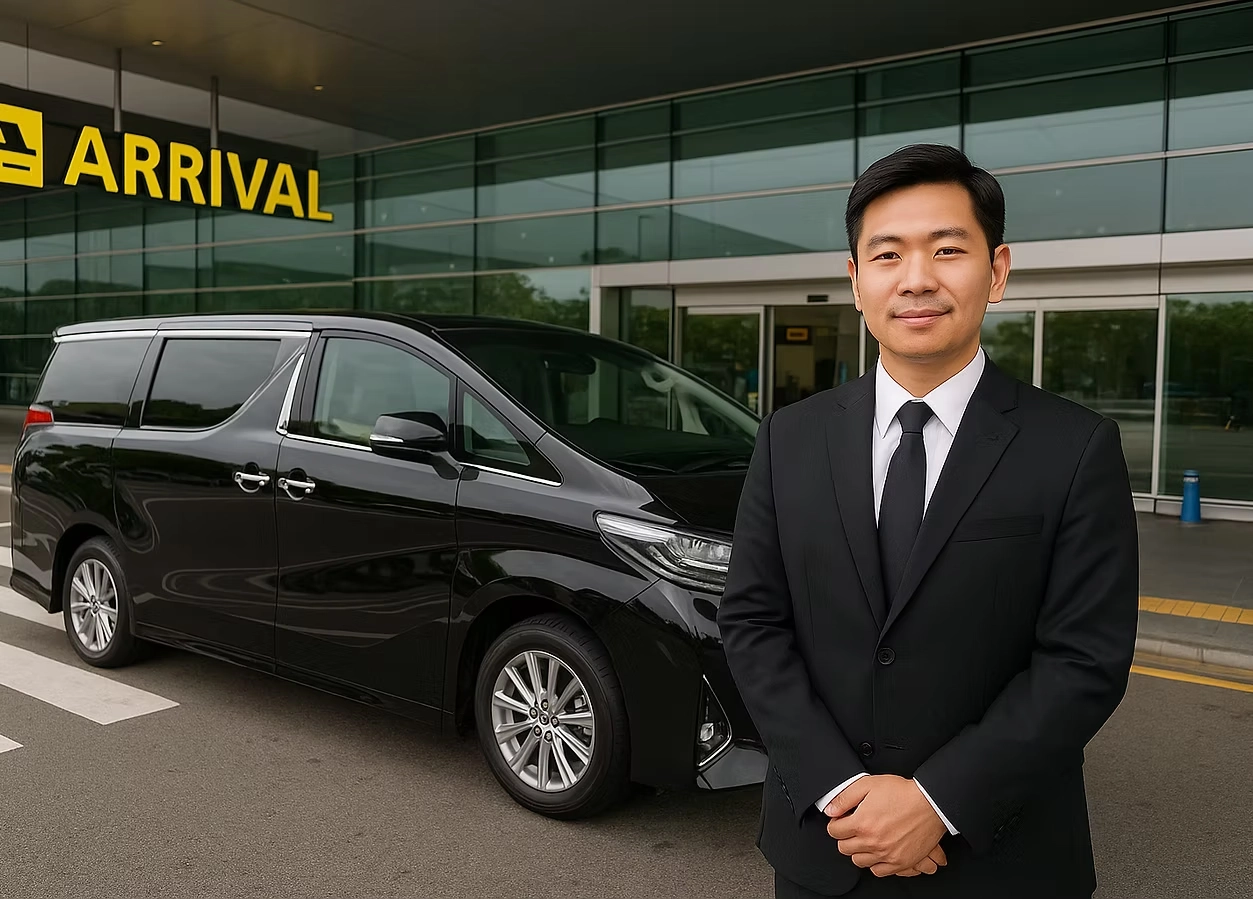
The driver is at the arrivals hall exit with a name sign before the passenger clears customs. Luggage is handled from the meeting point to the vehicle. The vehicle is pre-cooled and ready to move. The passenger is in the car within 10 minutes of clearing customs — without making a single logistics decision.
For VIP arrivals via JetQuay CIP Terminal, see our VIP airport transfer guide for the private aviation protocol.
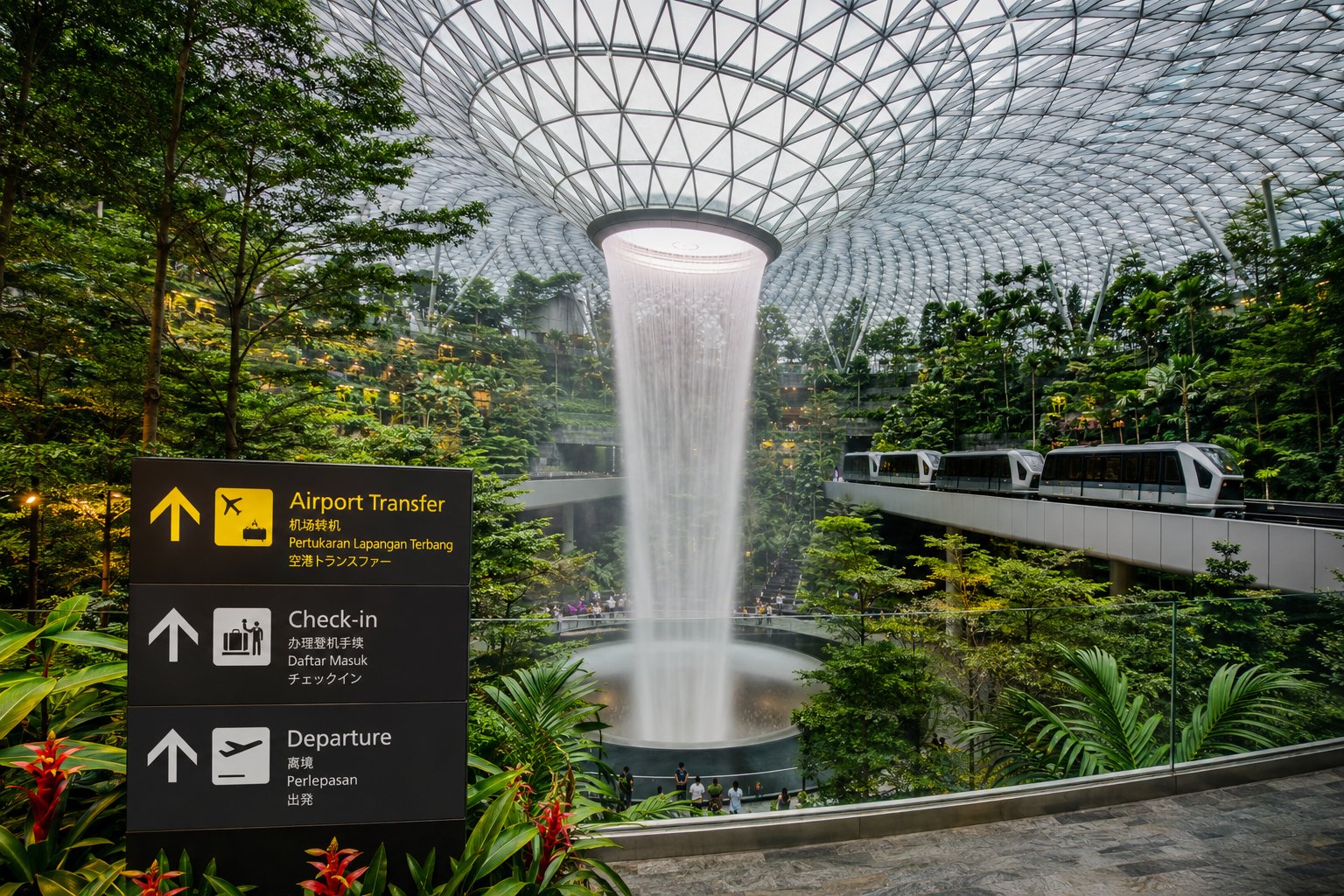
Changi Airport’s four terminals are not all in the same place. T1, T2, and T3 form the main terminal complex. T4 is a physically separate building on the eastern side of the airport with its own arrivals hall and private hire pickup zone.
A driver who goes to T3 when the flight arrives at T4 is in the right airport but the wrong building. Repositioning takes time your arriving guest does not have. Always confirm the terminal at booking — it is visible on the flight booking confirmation and on flight tracking apps.
For departure transfers from the CBD to Changi, the recommended pickup timing is: 3 hours before departure for international flights, 2.5 hours for regional flights. These buffers account for traffic on the PIE or AYE during peak hours and the additional time required for T4 departures, which involve a shuttle link from the main terminal.
The driver sends a reminder WhatsApp the evening before the departure confirming pickup time, vehicle details, and terminal. Your executive does not need to track the arrangement — it arrives in their phone the night before.
For a full overview of the airport meet and greet service including all Changi protocols, see our airport meet and greet service page.
Ready to set up your corporate account?
WhatsApp us — a real person replies in 5–30 minutes.
WhatsApp +65 8092 7662Frequently asked questions
WhatsApp +65 8092 7662 with the flight number, arrival terminal, passenger name, passenger count, destination, and vehicle preference. We confirm the booking with a fixed rate, track the flight from departure, and have the driver positioned at arrivals 15 minutes before landing. No action required after confirmation.
Changi Airport has four terminals: T1, T2, T3, and T4. T1, T2, and T3 share the main terminal complex. T4 is a separate building and requires a different approach route for drivers. Always confirm the terminal at booking — it is shown on your flight booking confirmation. A driver at T3 cannot quickly reposition to T4.
All airport bookings include real-time flight tracking. The driver adjusts their staging time automatically for any delay. No surcharge applies for flight delays of any duration. You do not need to call or update us — the system handles it.
Yes. The driver meets the passenger at the arrivals hall exit, assists with luggage from the meeting point to the vehicle, and handles loading into the boot. At the destination, luggage is removed from the boot and placed at the building entrance or hotel reception.
Related reading
Article by
Jovin Liau
Jovin is a passionate strategist focused on building brands that define excellence. As the founder of Veloce Limo, he oversees premium transportation solutions for the shipping, energy, and events industries across Singapore and Malaysia. With a deep background in corporate sales and a commitment to "doing what you love," he specialises in blending operational rigour with a world-class customer experience.